
Connecting the World's Most Dynamic Tech Corridors from Qatar
Why I believe the MENA-Global corridor is the most underestimated opportunity in global tech — and how we're building a fund to prove it.

The Thesis: Two-Way Innovation Corridors
When we launched Golden Gate Ventures MENA Fund I, we didn't set out to replicate what already existed. The region has no shortage of smart capital. Our intention was to leverage access to the best technology companies in the world, create a vast pipeline of early-stage opportunities in the region, and serve as a credible partner who can help those companies land and grow in one of the fastest-developing economies.
Our fund thesis rests on two pillars.
The first is investing in the MENA region itself. There is a generation of founders building across the GCC and wider Middle East who are tackling real structural problems — financial inclusion for underserved SMEs, healthcare infrastructure, logistics across complex cross-border supply chains, and the application of AI to transform industries such as oil and gas, manufacturing, and shipping. These aren't copycat models of Silicon Valley startups. They're companies built for the specific realities of this region, and regional capital partners understand those realities from the inside.
The second pillar is investing in top-tier technology companies outside the region and actively helping them expand into MENA. This is where the bridge metaphor comes into play. We're not passive investors. We're building an infrastructure of relationships, partnerships, and local knowledge that allows international companies to land in the Gulf with real traction from day one. Our fund invested in two US-based early and growth stage startups that leverage the GCC as part of their strategy.
This two-way corridor is what makes our approach different. We're not just deploying capital into MENA. We're connecting MENA to the global innovation economy, and vice versa.
What "Landing" Actually Looks Like
The concept of helping companies "land" in a new market sounds straightforward. In practice, it's one of the hardest things in venture capital.
Successful market entry in the Gulf requires a fundamentally different approach, and it starts with relationships. In MENA, business moves on trust, and trust is built over years, not quarters. The institutional investors we work with — family offices, sovereign funds, and corporate groups — have been investing globally for decades. They are sophisticated, well-connected, and deeply embedded in the regional economy.
Our full-stack landing model in practice works as follows.
Corporate partnerships form the backbone. When a startup or growth company from our portfolio wants to enter the MENA region, we don't point them to a single event or conference. We connect them directly with the relevant financial groups, corporations and tech companies who will become potential distribution partners, co-development partners, or strategic investors. These introductions come from years of relationship building.
Government and regulatory support is the second layer. Qatar, the UAE, Oman and Saudi Arabia have all built sophisticated programs to attract international tech companies — free zones with favorable fiscal environment, regulatory sandboxes for fintech and healthtech, grants for R&D, and residency pathways for founders and their teams. We work closely with entities such Hub71 in Abu Dhabi, institutions across Oman, Qatar Development Bank, QSTP, and QRDI to ensure our portfolio companies can access these programs efficiently.
The third layer is the network effect of our limited partner base. Our investors include influential families and institutional groups across the GCC. They're providing a gateway to an ecosystem of commercial relationships, industry expertise, and regional insight. Our portfolio companies get adopted into a network that can accelerate their growth trajectory.
This is the core of our value proposition.
The Fund’s Positioning in Qatar
Qatar is at a pivotal point in its development as a global economy. The country has made significant investments in startup infrastructure over the past several years, and the results are starting to compound. More founders are building companies here. More investors are establishing funds. And more international startups are considering Qatar and the broader GCC as a viable landing pad for regional expansion.
What attracted us specifically was the regulatory framework and the depth of relationships we were able to build. Qatar Financial Centre provides a well-structured and internationally recognized regulatory environment for fund managers. The families and institutional investors we've built relationships with here are the kind of long-term partners who think in decades, not fund cycles.
There's also a strategic logic to Qatar's positioning. It sits at the crossroads of the GCC, with strong ties to both Saudi Arabia and the UAE, and increasingly to Africa and South Asia. For a fund that's building cross-border corridors, that geographic centrality matters.
Challenging the "Capital, Not Innovation" Narrative
There's a persistent narrative in global tech circles that the Gulf is a source of capital, not a source of innovation. I understand where it comes from — the region's wealth is visible and well-known, and the startup ecosystem is still young compared to mature ecosystems. But having lived here and worked closely with founders, government leaders, and institutional investors, this narrative is outdated.
The Gulf states are building the conditions for innovation to happen locally. Qatar's investment in QSTP as a science and technology park, initiatives from Saudi Arabia's KAUST University and its ambitions around future technologies, the UAE's AI strategy, Oman’s investments in global top-tier technology companies — are proof of long term term bets on building knowledge economies.
What is most compelling is the pragmatism. Governments aren’t trying to recreate other ecosystems,but rather use them as examples. They're building something suited to their own strengths — deep capital reserves, strategic geographic positioning and energy resources that can power data centers and manufacturing. The innovation that will come out of this region won't look like what came out of other regions. It will be shaped by the specific problems and opportunities of this part of the world.
The Southeast Asia Playbook, Applied
A decade in Southeast Asia taught me things that are directly applicable to what we're building in MENA, often in ways that aren't immediately obvious.
Both regions are young ecosystems that are growing fast. Both have governments that are actively shaping the innovation economy through regulation, incentives, and direct investment. Both have large, underserved populations that create massive opportunities for technology companies. And both have a relationship-driven business culture where trust, presence, and long-term commitment matter more than a slick pitch.
But there are also important differences, and they create complementary strengths.
Southeast Asia has more mature early-stage capital markets and is developing real secondary markets and exit pathways. The region has produced multiple generations of founders, and the ecosystem has the depth to support companies from seed to IPO. MENA is earlier in that journey, but it's accelerating fast — leveraging fresh infrastructure and government investment to leapfrog some of the barriers that took Southeast Asia years to overcome.
On the capital side, the dynamics are almost perfectly complementary. Southeast Asia has a deep bench of institutional LPs, fund-of-funds, and development finance institutions that understand venture capital. MENA has some of the world's most sophisticated family offices and sovereign wealth funds, with a growing appetite for direct venture exposure. By operating across regions, we can connect these capital bases in ways that create value for our portfolio founders.
The exit landscape is also evolving differently. In Southeast Asia, we're seeing secondary markets mature and public market exits become more viable. In MENA, the most compelling exit pathway right now is corporate M&A — regional conglomerates acquiring technology companies to accelerate their own digital transformation. Understanding both landscapes allows us to guide portfolio companies toward the exit strategy that makes the most sense for their specific situation, rather than forcing a one-size-fits-all approach.
There's also a human dimension to this cross-regional experience that's easy to overlook. Having built relationships with LPs, founders, and operators across both ecosystems means we can make introductions that simply wouldn't happen otherwise. A logistics founder in Jakarta can learn from a supply chain operator in Riyadh. A healthtech company in Bangkok can find its next growth market in Abu Dhabi. These connections don't show up in fund performance metrics, but they compound over time.
The Sectors We're Betting On
Our investment focus is shaped by where we see the strongest convergence of regional demand, global innovation, and our own network advantage.
AI for industrial applications is an area where MENA has a natural advantage. The region's core industries — oil and gas, petrochemicals, manufacturing, shipping, and logistics — are capital-intensive and data-rich. AI companies that can optimize operations, improve safety, and reduce costs in these sectors have immediate, large-scale customers. This isn't the speculative AI hype you see in consumer applications. It's practical, deployable, and ties directly to the economic diversification agenda that every GCC government is pursuing. Besides AI Infrastructure the rise of regional AI Agentic platform hasn’t gone unnoticed. Companies such as Arabic.ai are pavin the way for localized AI solutions for enterprises.
Healthcare and biotech present a compelling opportunity given the region's investment in healthcare infrastructure and the growing emphasis on preventive care, genomics, and digital health. The Gulf states are building world-class hospitals and research centers, and they need the technology stack to power them.
Fintech remains a sizeable opportunity in the region. The SME sector across MENA is massively underserved in B2B financial products — payments, lending, insurance, treasury management. The regulatory environment is evolving rapidly, with central banks across the GCC launching open banking frameworks, digital currency initiatives, and fintech sandboxes. We're looking for companies that can build the financial infrastructure this growing economy needs.
We're also researching global and regional quantum computing developments. Our investment in SpeQtral, which focuses on quantum communications, is an example of how we allocate capital in this sector. Quantum has the potential to impactfully transform industries like healthcare and finance, and the Gulf states are positioning themselves as early adopters and infrastructure builders.
And data infrastructure — cloud, edge computing, data centers — underpins everything. The region's demand for digital infrastructure is growing exponentially, driven by government digitization programs, enterprise cloud adoption, and the AI boom. Our investment in Omani startup, Byanat, underpins that strategy..
The Long Game
The commitment to building an innovation economy isn't driven by one government program or one economic cycle. It's driven by demographics — a young, tech-savvy population and it's driven by economic necessity — these nations understand that economic diversity is the next chapter of prosperity and is dependent on knowledge economies and technology.
Founders are building because they see gaps in industries that technology can fill — and because, capital, infrastructure, and institutional support are there to help them succeed.
What excites me most is the compounding effect of what's being built. The startup infrastructure investments are creating a foundation that can sustain itself for decades. More founders are building. More investors are launching funds. More international companies are choosing the Gulf as a growth market. Each of these reinforces the others.
As a venture capitalist, my job is to identify key inflection points — moments when the trajectory of a market is about to shift. I've been fortunate to identify that inflection point twice in my career and it’s definitely happening across the MENA region.
When I think about why I moved — it comes back to something simple. The most important things in venture capital aren't built from a distance. They're built by showing up, by staying, and by earning the trust of the people you want to build with.
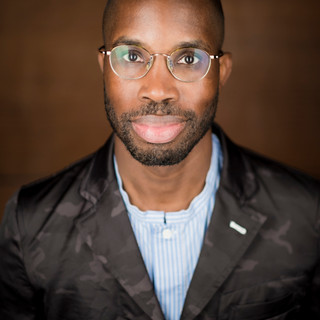
Michael H. Lints is a Founding Partner MENA at Golden Gate Ventures, where he leads the firm's MENA Fund I — the first international venture capital fund established and managed from within Qatar. He has over 20 years of experience in technology entrepreneurship and venture capital across Europe, Southeast Asia, and the Middle East.


Thank you for sharing this — Qatar's ambition to connect the world's most dynamic tech corridors positions the country as a genuine bridge between East and West, creating exciting opportunities for businesses and innovators ready to leverage that strategic advantage. Managers tapping into that momentum are turning to a managerial economics course & workshop for managers in Doha, Qatar — where economic strategy, market dynamics, and technology-driven growth are explored with genuine professional depth.
Thank you for sharing this thought-provoking article. The idea of connecting the world’s most dynamic tech corridors through Qatar highlights the country’s growing role as a bridge for innovation, investment, and global business collaboration. As technology ecosystems become increasingly interconnected, understanding the economic forces that drive growth, competitiveness, and market expansion becomes even more important. The themes discussed here resonate with professionals attending a managerial economics seminar & course in Doha, Qatar, where strategic decision-making, market dynamics, and economic analysis help leaders navigate opportunities in an evolving global technology landscape.