
The Crossborder opportunity between MENA and Central Asia
Why I Came Back to Tashkent — And Why More VCs Should
Last week I traveled back to Tashkent Uzbekistan and joined CEVF 2026 and found myself in an audience of 800 investors, founders, and tech leaders. This was the 5th edition of the Central Eurasian Venture Forum (CEVF 2026). I was there as a speaker, but more importantly, I was there to sign a Memorandum of Understanding between Golden Gate Ventures' MENA fund and IT Park Ventures — formalizing a bridge between the Gulf and Central Asia.

Here's why that matters.
Central Asia is no longer a frontier — it's a corridor
When people think of "Central Asia" in a venture context, it is often understood as frontier. Remote. Early. The data is telling a different story. Total VC investment across the region hit $320 million in 2025. Kazakhstan alone nearly tripled its venture volumes to $209 million, with AI startups driving roughly half of that. Uzbekistan saw funding reach $153 million (and it's $329M million including the Click deal) — an eleven-fold increase from just three years earlier. There are now over 12 active venture funds operating in Uzbekistan with combined assets exceeding $136 million, up tenfold in five years.
These numbers reflect real infrastructure being built: government-backed accelerators, tax-free IT parks, and a generation of founders who grew up digital-native in economies that are modernizing fast.
The MENA connection changes the equation
What makes this moment particularly interesting for Golden Gate Ventures is the convergence between Central Asia and the MENA region. We've been building our presence across the Gulf — with our MENA Fund I being the first international VC fund established and managed within Qatar — and we're seeing the trade and capital corridors between the Gulf states and Central Asia strengthen in real time.
The Trans-Caspian Corridor, linking Europe through Turkey and the Caucasus to Central Asia, has seen trade quadruple since 2022. The EU committed 12 billion euros in infrastructure investment at the first EU-Central Asia Summit in 2025. And in November, Tashkent itself hosted the Trans-Caspian Transport Corridor Investors Forum, signaling that this route has moved from aspiration to strategic necessity.
For venture capital, this connectivity matters because it creates the conditions for startups to scale beyond their home markets. A fintech built in Tashkent can serve a corridor that stretches from Istanbul to Almaty. An AI company in Kazakhstan can find its first enterprise clients in Dubai or Riyadh. The geography that once isolated these economies is now becoming their advantage — sitting at the crossroads of Europe, the Middle East, and East Asia.


During CEVF global and regiona MENA investors were present such as Alina Truhina, Founding and Managing Partner of Utopia Capital, Nada Shaheen, Managing Partner at GB Ventures and Rock Oh, CEO and Managing Partner at Awesome Ventures.
What I saw on the ground
CEVF 2026 was the first time the forum moved beyond Kazakhstan, and the energy in the room reflected that ambition. Panels brought together investors from the US, Singapore, South Korea, and the UAE alongside local founders and policymakers. The conversations were practical — they were about deal structures, market-entry strategies, and which sectors (AI, fintech, logistics, greentech) are ready for cross-border capital.
Signing the MoU with IT Park Ventures was a highlight. IT Park is Uzbekistan's flagship tech ecosystem — home to a $10 million venture fund that's already backing companies like Geomotive (DOOH advertising) and Datatruck (freight logistics automation). The partnership will help connect their portfolio companies to our investor network across the globe, while giving our LPs exposure to a market that most global funds haven't discovered yet.

The thesis in a sentence
Central Asia will become a more important market for MENA from a venture perspective — it is developing fast, with impactful regional connectivity, and at a moment when global LPs are actively looking for diversification beyond the usual suspects.
If you're an investor who's been watching from the sidelines, Tashkent just made a very compelling case for getting on a plane.
---
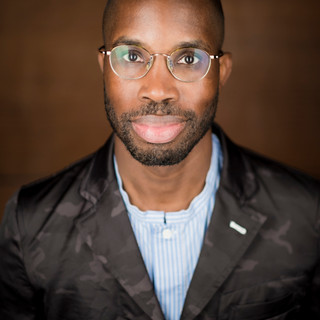
Michael Lints is a Founding Partner MENA at Golden Gate Ventures, a global early-stage VC firm investing across Southeast Asia, MENA, and emerging markets.
Photos from the Central Eurasian Venture Forum 2026 in Tashkent, Uzbekistan.


Comments